A Little Squee From Me!

0913 Eyes Only_Final[1]That squeal you heard up in the Northern Hemisphere, yeah, that was me.

My September release, For Your Eyes Only got a double whammy recommendation this morning!

First, I was Loved by the Librarian aka, The Shallow Reader. Then that same librarian loved me more and gave me a shout out on a list of Best Books of 2013 for 702 ABC Sydney radio!

Pardon me whilst I jump up and down and make high pitched noises o’ glee. I am honoured to have been included and so pleased that The Shallow Reader Librarian Vassiliki liked For Your Eyes Only, the novel I wrote as part of the PhD I submitted for examination yesterday.

What’s In A Name? It’s All Geek (and Greek) To Me.

0913 Eyes Only_Final[1]There are those writers who have a purpose in mind when they name characters. Ray Bradbury’s tattooed and mysterious “Mr Dark” in Something Wicked This Way Comes, for example, is a fitting name for someone who personifies evil. I had a reason for the name I chose for the heroine in my upcoming release For Your Eyes Only. Willa Heston, a physicist, is named after the author Willa Cather, mainly because I love her books O Pioneers, My Antonia, and Death Comes For The Archbishop, which, like For Your Eyes Only and A Basic Renovation, takes place in New Mexico. See that connection?

Using Heston for Willa’s last name was also deliberate choice; it’s my nod to the actor Charlton Heston. chuck1However, I did not know this would be the source of some trouble. No, I don’t mean the issue stems from Mr Heston’s work as a political activist or his 5 terms as president of the National Rifle Association. I picked Heston because, as a very young child, Chuck H seemed to be in EVERY movie I saw on TV. I understood nothing about his “Cold Dead Hands” NRA gun rights activism, but what I did know from those movies, the ones where Chuck was Moses, or fought off Apes, or rode in a chariot race, was Chuck was THE MAN, the HERO. As some of you may recall from earlier post (see Bondage of Another Sort), Heroic Chuck had a such huge influence on me that when it came time to picking a name for a woman who makes calm, deliberate choices I automatically, and quite geekily, reached for the Heston. This is where my geekiness backfired. In the novel, the name Heston becomes a bit of a joke, a play on the name, a gee, aren’t I so clever to do what people do in real life kinda thing. My cleverness backfired into a different meaning altogether, one I find absolutely hilarious.

My very dear Greek friend, Vassiliki, pointed out that in GREEK, Heston, or rather, χέστον, means “shit on him.” Willa Heston is actually Willa Shit on him.

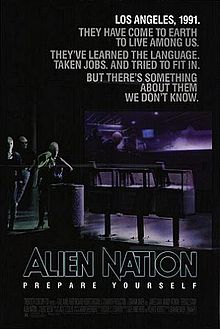
alienYeah, kids, I’m having a real life Alien Nation moment. You ever see that movie? It’s a bitchin’ ’80s science fiction film that stars Mandy Patinkin and James Caan. Patinkin plays the Newcomer alien, Samuel Francisco. Get it? Funny name, right? Yeah, ha-ha. But Caan is Matthew Sykes. Not so funny in English, but in the Newcomer language Sykes means shithead.

Thanks to Vassiliki @vaveros and Steven Moschidis, aka “@TheBeardedLlama” for this morning’s Greek lesson and revelation!

Maybe I Need to Wear a Cape

I have been told I often I live up to the meaning of my first name, Sandra, from Alexandeathenar: Defender of man. This might be true (Yes, I know that’s Athena over there, but you get what I mean)

For years, I have talked about the lack of age representation in romance on OldBitey. First on the Oldbitey LiveJournal Blog, then here. But yesterday somebody else asked me the questions. Yesterday, I was on my soapbox on someone else’s blog: Read in a Single Sitting, and I was Advocating for older protagonists in romance fiction. If you are familiar with Oldbitey, you know my spiel, you know my PhD research is all about mature-aged romance heroines, but mostly I am really an advocate for inclusion.

I love romance fiction. I read across all genres, but I have a special place for romance. In romance there is something for everyone. Yes,  there is a lot of ‘white romance,’ but there is also some diversity outside the white hetro romance. There are m/m romance, lesbian romance, there’s even ethnic diversity if you look for it–not a lot, but it’s there. You can find stories of cross-cultural romance (Sheiks and Greeks anyone?), plus-sized heroine romance (although what makes plus-size is up for discussion) and inter-species romance (e.g. weres, vampires, aliens, shapeshifters).  There are, however, certain demographics seldom represented as protagonists in romance fiction. There is lack of heroes or heroines who are amputees, wheelchair bound, or have physical or mental challenges–such as Tim in Colleen McCullough’s Tim —the only romance I can even think of where a protagonist is, as McCullough puts it “not the full quid,” which of course speaks volumes to the attitude regarding disability of any sort. While ‘challenged individuals’ come in all forms, special demographics confront something that romance often wrestles with. The question becomes: How real is too real in the fantasy of romance?

There is a strange idea at work here with regard to the idea of how ‘real’ the romance fantasy can be. Some say too much realism ‘spoils’ the fantasy for them, but that is only when it comes to the age of the characters, as well as physical capability and mental capacity. Some readers prefer everything to be whole, pretty and young. All the time. Yet even within that whole, young prettiness, romance is incredible for addressing real life social issues, mores, and cultural standards, and changing the attitudes about them. Rape, divorce, single parenthood, abuse of all sorts, sexuality, the position of women in in business, in schools, in professions have all been poked and prodded and interrogated in romance and have transformed social sensibilities. These matters do not appear to be ‘too real’ to be included in a romance fantasy. So what the hell’s the matter with including the other incarnations of real human life in the fantasy?

The interesting hard fact is, the romance genre transforms itself and becomes more inclusive with each year. One day, I expect to see an even broader choice for all tastes, a broader scope of real people given the opportunity to participate in the fantasy because that’s what romance does.

Doesn’t it?

Meanwhile, as you ponder my musings, I’ll let my awesome scarlet cape flap in the wind and stand poised on my soapbox, ready to swoop down and defend and support forgotten demographics.


A Romance By Any Other Name…

I’ve been sitting on this for a little while, brewing my thoughts to get them just so. Usually, dears, we discuss that rare-but-subversive woman known as the Mid-life romance heroine–and lack there of. I’m heavy into that big ol’ taboo of fading beauty, saggy boobs, and gettin’ funky with middle-aged sex. This year brings us to another subversive, very particular taboo in romance fiction: The windy pop

Yes, kids, today I’m talking about farts. Turn away now if you can’t deal with my cheese-cutting-is-adolescent sense of humour.

Let’s get to it. I wonder why there exists a form of a double standard when it comes to Romantic Comedies and farting. In celluloid rom-com the bottom-burp (How many fart euphemisms can I work into this post?) is allowed. TV’s Sex And The City had an entire episode based around the humble bun shaker. Rom-com films and Chick Lit aren’t afraid of firing a little stink torpedo, but Contemporary romantic comedies in print form run screaming from the threat of a tiny squeaker. Is a fart not really a fart if you can watch it come to life in a moving picture?  In a big screen broad romantic comedy, like Bridesmaids, a little gas and diarrhea is fine, but why is it the game changes in print? Farting, like loose skin, or erectile dysfunction and vaginal dryness, or a little grey in the pubic area simply can’t play any part in the fantasy of romance in print. I wanna know why rom-com lovers can tolerate film & digital image gas but not when it’s printed on a page.

Here are some questions I pose to you, my worthy friends:

1. Is the issue with a printed fart your imagination? That is, is it because the mind’s eye vision of the passing of gas you read about much, much more malodorous than the one you watch on screen?
2. Or is it for the same reason you seldom find (or see) fictional 40+ romance heroines or older people having sex: it comes down to an ICK FACTOR?

If you answered yes to question 2, I say, hold on sweet talkin’ lover…it’s so sad if that’s the way it’s over.

Romance comes in all forms. If the romance is key to the story, why should the little bits like body shape, age, and less-than-perfect-all-too-human tooting ruin the fantasy? Yes, my romance fantasy may not be your romance fantasy. My idea of funny might not match yours, but maybe we can agree on a few things. Beyond slapstick stuff, comedy is generally situation based. Contemporary rom-coms are usually situational. Finding love is situational. Falling in love is situational. The fantasy of love is situational.

This situation completely works for me. It’s the sweetest fart story I’ve ever heard, and it’s ripe (excuse THAT pun) for inclusion in a big screen AND print version romantic comedy.  The story comes to me from VaVeros, author of Shallowreader’s Blog (http://shallowreader.wordpress.com/) It goes something like this:

Amy and Ryan (fake names, naturally) have just had their very first date. The date went well, very well, and Amy happily gives Ryan a ride home. She drops him off in front of his house. Windows down as she reverses out, Amy safely releases the gas she’s been, politely, holding in for the last few minutes. When she pauses to change from Reverse to Drive, Amy discovers Ryan leaning in at the passenger window to restate how much he enjoyed their first date. Of course Ryan was startled, but the air biscuit was all it took. Surprise gave way to laughter and then it was love, not at first sight, but first fart. Ryan fell in love with Amy the moment he saw (and smelled) her humanity. They’ve been married 15 years.

When it’s handled in the right way there’s not so much an ICK factor there as you might have thought, huh? You can see the entire romance blossom from that one little fizzler.

But what do I know. I’m a stinker for romance.

The Bite Lecture Series on Romance Fiction: Romance Heroines Are Not Sissies, So Man Up Part 2

 
Welcome back. We hope you enjoyed the brief, DeLorean-free trip to the past and apologise for today’s bumpy landing. To refresh your memory, we were discussing

Sleeping with someone other than the hero;Being a bitch; using foul language; and (my favourite) Having the cojones to be over 40.

Yep. You heard that right. It’s a taboo to be 45 and in love… in Contemporary romance.

I’m being specific about contemporary romance fiction for a reason. I’ve always loved interplay of real life with the fantasy part of falling in love. That’s why contemporary rom is what I most enjoy reading, it’s what I write, and what I’ve noticed is oddly age limited. It’s pretty freaky when you know the average age of a romance reader is 44.9 (see RWA www.rwa.org/cs/readership_stats) because despite that, a form of segregation creeps into Contemporary. After 40 a woman’s characterisation changes. She becomes what I’d like to suggest can be viewed as an additional incarnation of the ‘other‘ woman, where her age equates to a source of comedy, an unworthiness, or form of evil. ‘Other’ women have a place in romance fiction. I like a well-crafted female villain, but this isn’t about the purpose served by that sort of characterisation, or even about the way ‘other’ women are typically punished, although I can argue that the segregation I mentioned is a form of punishment.

Some of you have read my schtick before. You regular Biteyites know I research the phenomenon that moves a woman 40-plus out of contemporary romance fiction and ushers her, or for the sake of this entry, segregates her, into those genres that fall under the term of Women’s Fiction—the Hen, Matron, and Granny Lit type stuff where the story is driven by the female protagonist’s emotional growth. In contemporary romance, when a forty-plus woman makes an appearance it is often as a secondary character, sometimes with a subplot of her own (hello Susan Elizabeth Phillips!), but most of the time Ms. Forty is cast as a stereotype rather than as heroine.

Lately, there’s something I’ve noticed. A heroine’s age is treated differently across a few romance subgenres. In historical romance, most authors strive to be accurate with the context of their story’s place and time. Historical authors are aware that life spans were more limited in the Eighteenth Century than in the Twenty-first, which means middle age in Regency times (and this is a big fat guess here) was somewhere around, let’s say, 28-32. For the sake of historical accuracy, a 19 to 20-something old-maid heroine is not out of place in a Regency romance. In Paranormal and urban fantasy romance age exists in a magical world that has no bearing on a heroine’s part in the story if she’s a vampire, shape-shifting, alien witch-goddess. Indeed a woman can be all that she can be in these subgenres, but in contemporary romance it’s uncommon to find a woman of a certain age allowed that same agency.

Oooh. I threw you for a loop there, with that bit about ‘agency’ didn’t I? ‘Scuse me, my dissertation’s showing.

Think of all those forms of ‘other women’: the Stifler’s Mom cougar, evil stepmother, cranky old lady, mutton-dressed-as-lamb-whore, grandma, menopausal-wise-crackin’-best friend. None of these ladies are allowed to have centre stage. None of these women get to star in a book of their own.

OK, sometimes they do. The Age-Sinning Heroine is out there in Contemporarylandia. There are those who buck the trend. Julie, is in her sixties in Jeanne Ray’s Julie and Romeo. Nora Roberts has Roz in The Black Rose. Jennifer Crusie’s got Nell in Fast Women. But come on, we’re talking Nora and Jenny! They can do almost anything because they’re, you know, Roberts & Cruise!

Roberts & Crusie—sounds like a cop Buddy movie, dunnit? Maybe it should it be Crusie and Roberts…

Anyhow, I’m here to make a point, so let’s get back to the idea of the ‘other’ and look at one more Crusie offering. J.C. brought us Shar in Dogs and Goddesses. Shar’s 48 and, like Diana Gabaldon’s Outlander Claire, she appears in a world where magic is possible, where being 48 doesn’t matter, where age isn’t made an issue to the love story. This “other-worldliness” of paranormal fiction connotes an older woman can exist as a heroine, but only if she possesses some sort of extraordinariness that propels her further beyond the usual fantasy of romance, beyond the ordinary realities typically found in contemporary fiction. The heroines in paranormal romance are allowed to be much more subversive than their contemporary counterparts. They aren’t sissy girls. They can behave like ‘other women.’ They can sin. They can act like men. They can cuss. They can be bitchy. They can kill people. They can sleep with another man besides the hero. Oddly enough, if you leave out the vampires, changelings, magic, and telekinesis, when you get down to the actual fantasy of romance, the paranormal romance heroine is the most realistic warts-n-all representation of a real woman. And they aren’t punished for it.

What this says, and I’m talkin’ bottom line here, is that if you’re looking at the other side of forty, and you wanna be a real woman, you wanna be bad, you wanna get to fall in love, be confused by the trip, have wild chimp sex, a happily ever after, or happy for now, forget contemporary romance. Pick up a paranormal to find your ‘normal.’

Meanwhile, I’ll keep writing my contemporary romantic comedies with non-sissy 40+ women who man up and act like sinful paranormal heroines.

The Bite Lectures on Romance Fiction: Heroines are Not Sissies So Man Up and Get Real Part 1

The Bite Lectures on Romance Fiction:
Heroines are Not Sissies So Man Up and Get Real:


Say, Kids, when it comes to
No-no’s for heroines in contemporary romance fiction, what would you list as the Ultimate SIN? That’s what we’re discussing at today’s lecture and we’re gonna get right to it, but  audience participation is essential for this dialogue, so who’d like to go first? Raise you hand, please.

Ah, down in front. Thank you, Mary Ann. Yes, yes. That’s what I’m after. The heroine sleeping with a man other than the hero is a sin, and many here would agree with you on that one. That’s a start. We’ll come back to that in a bit. May I see some more hands?

Hi Mary Elizabeth. I see you’re a first timer here at Oldbitey. Welcome. What’s that, Mary Elizabeth? You say the heroine must never be a bitch? OK. OK. That’s something else, and I think we’ll come back to that in a little bit too. Anyone else?

You, down the back, Mary Kate, is it? Can you speak up, please? Yes…yes…Let me just repeat that for our Biteyites who didn’t hear you. Mary Kate said, “The heroine must never say fuck, shit, or…now Mary Alice pipe down. Come on, we’re all adults here and I’m certain we’ve all heard it before. The heroine must never say fuck, shit or cunt. Oh, we’re gonna come back to that little gem too.

I’m not surprised you mentioned those things as sins. But I’d like to point out a curious little fact. The one Mortal Sin no one mentioned is the heroine having the gall to be over forty.

Biting Hands Across The Water Charity Debate: Join Us

Fairy tale princess Oldbitey is all about romance. She believes in the redemptive power of love while cherishing the chains of her soft-as-a kitten feminine bondage. You also know, as a romance reader, scholar, and writer of so-called sensationalist romance porn-fluff, she busts myths and misconceptions of the romance genre with PhD research titled Cougars, Grannies & Menopausal Knitters: Roles, Representations of Age, and the Non-Traditional Romance Heroine.


This Thursday night, her academic and modest bosom will heave beneath a pale pink, un-ripped bodice, as she spars with the “male members” of a delightful Q&A debate panel set to take place at the Hands Across the Water Fund-raising dinner.


An evening of fun, laughter and strong debate is assured when a panel of celebrities (Ooh! Oldbitey is a ‘celebrity!’) debate the "best and worst of the opposite sex". Hosted by one of our Brisbane based 2011 Thailand Bike Riders, the evening will seek to raise funds in between the laughs and entertainment. A three course seated meal along with drinks is included and ticket sales will commence shortly.
 

Yes, that’s this Thursday, 14 October. It’s not too late. For more information on how YOU can come and watch Oldbitey look like a complete idjit, or how you can make a donation, visit:  www.handsacrossthewater.com.au/fundraising_activities

Suck on that, Other Charity Events!

Peanut Butter, Fiction, and ReaI Life?

Is this your classic chicken or egg moment? Did a plot device occur because of my obsessive love of peanut butter or did an obsessive love of peanut butter occur because of a plot device?

The one thing for certain is that I’m down to one 1lb 12 oz jar of Jif Creamy. This house has eaten, and it shocks me to realise this, 3 and 1/2 lbs of peanut butter since June.

You’d think I’d be the size of a shed by now. Or at least jar-shaped. Jif jar-shaped, that is, minus the red cap and label. Fortunately, I have a good trainer (I heart you,Tracey) and Shrinky’s responsible for some of the eating, which you know chaps my hide because it was supposed to be my present, and since the peanut butter was bestowed upon me, by him nonetheless, I shouldn’t have to share it.

But I digress.

Writing is a curious thing. Like other writers, I make music soundtracks to fit the novel I’m writing. The soundtrack goes with the mood of scenes, characters, and the overall tone of the novel itself. I’ve got a cracking Powerpop soundtrack to And She Was (the current WIP for you newbiteys), but this is the first time one major food group (and peanut butter is a MAJOR FOOD GROUP) has gone with the mood, characters, and overall tone of the novel. It’s like product placement in movies. Peanut butter appears everywhere in And She Was. Peanut butter is the thread that weaves through relationships. Peanut butter makes a mess. Peanut butter is eaten for dinner. Peanut butter is a vital clue to a mystery. Peanut butter appears in a love scene. And while all that peanut butter madness goes on in fiction, I slather some on a cracker, my banana is smeared with a coating, the dog’s Kong gets stuffed full of it.

Is one thing feeding off the other? When I finish writing And She Was, will I also finish with peanut butter? Or will I simply run out? My supplier is sold out and I just opened that last jar from the pantry…

Revisitin’ the Past AKA Robbin’ the Grave of a Previous Post.

Perhaps some of y’all will remember my theory of why Vampire Paranormals sell so well?  If you don’t, or if you haven’t ever been a faithful Bitey-ite, allow me to revisit that theory. But first, I have to admit I don’t "get" the fascination with weres or supes for that matter (save Sam Merlott–come on, a collie? Loveable). I can embrace vampires. Sort of. There was a time I was big into tortured, brooding Louis In Interview With The Vampire and I love me some Bill Compton, but my theory about why vampires sell revolves around the very nature of vampires. They never age. The lure of the vampire is all about the youth-fixated, youth-aimed, youth-embracing media. Vampires perpetuate a big ol’ myth. Gee, if you’re a vampire, you get to live forever. You get to be ageless and beautiful forever. As I said back in 2008 "Hell, no wonder paranormals are hot. At $20 a book, reading about a gorgeous, thin person with a fabulous night life is a cheaper fantasy than $300 a pop for Botox or even bigger spondoolies for a nose job."

I still think that. I still believe that is why we, as romance readers and YA  readers, are innundated with Twilight clones. Allow me to issue an apology before I go on. Sorry if I offend the supe-lovin’-were-cuddlers out there, but I am ready for this shape-shifting paranormal trend to fade like a vampire in the sun. I want someone to curb those dogs. Look, I’m not talking Stake ’ems, or Steak ‘ums (Oldbitey is vegetarian, after all). I don’t want all Vampires to die off, or all weres on a leash. I simply want more variety in my book store, more room on the shelves for other kinds of romance. Oh, all right I want MORE contemporary romance.

What trend is going to come next? There’s speculation it’s already here with the Amish Romance. I think that’s a passing fancy. Living forever is a big dream for some, but Living Amish? Well, with iPods, Twitter, and disposable diapers I don’t think so. So here’s my suggestion for a HOT NEW TREND!
Know how once you’re over 50 you’re life is basically over and you’re pretty much dead, which means have no sex life? Who’s interested in romance and sex when your heart’s stopped, you only look good in the dark, and you’ve sprouted hair all over your body? Gee, that sounds like the beginning of a paranormal, dunnit?  Well, think again. Seventy-eight million romance-reading Baby Boomers (and the entering their 40s Gen-Xers) with money to burn are gearing up to make noise.

Hell, they’re already making noise, they’ve  put a few ripples in the pool when it comes to TV shows like Saving Grace, The Closer, and Cougar Town (ill wind to the person who gave the show that title). Hollywood is starting to catch on with movies, like Something’s Gotta Give and It’s Complicated. Eventually, I believe Publishers, who are always looking for the NEXT BIG THING will get this. Somebody (like me and the ladies at Facebook’s OnPAR) will knock it into their head. They will pick up stories with heroines over 40. Yes, that’s right people. In this next trend, you’re going to be able to read ROMANCE Fiction (not Women’s Fiction) about beautiful 40 and 50 somethings falling in love.

And there will be sex scenes in those books.

Oh, please! Who’s being prudish now? Don’t you DARE groan or cringe or think that your parents only ever did it once on a cloud and begat the miracle of you. If you can take the blood-soaked sex scene, the transforming supe sex scenes, surely you can accept the fact people over 40 fall in love and boink like crazed weasels.

Mind you, this is pure speculation. But I’d be willing to make a bet something’s gonna change. Ageing is gonna be HAWTT. Or Maybe it will all be about sexy Amish beards and barn raisings.

Conventions Without A Real Convention Centre.

Normal.dotm
0
0
1
289
1651
Sandra
13
3
2027
12.0

0
false

18 pt
18 pt
0
0

false
false
false

/* Style Definitions */
table.MsoNormalTable
{mso-style-name:”Table Normal”;
mso-tstyle-rowband-size:0;
mso-tstyle-colband-size:0;
mso-style-noshow:yes;
mso-style-parent:””;
mso-padding-alt:0in 5.4pt 0in 5.4pt;
mso-para-margin-top:0in;
mso-para-margin-right:0in;
mso-para-margin-bottom:10.0pt;
mso-para-margin-left:0in;
mso-pagination:widow-orphan;
font-size:12.0pt;
font-family:”Times New Roman”;
mso-ascii-font-family:Cambria;
mso-ascii-theme-font:minor-latin;
mso-fareast-font-family:”Times New Roman”;
mso-fareast-theme-font:minor-fareast;
mso-hansi-font-family:Cambria;
mso-hansi-theme-font:minor-latin;}

This past Tuesday, Smart Bitches Trashy Books posted an entry about romance heroines who don’t want kids.www.smartbitchestrashybooks.com/index.php/weblog/comments/gs.-vs.-sta-heroines-who-dont-want-kids/  For some readers, the love has to lead to marriage and an ending, or epilogue, with a baby carriage. For others, like me, the kid is an unnecessary convention often found in romance fiction.

Conventions are the hallmark of popular fiction. We all know romance fiction abounds with conventions and clichés; the secret baby, the marriage of convenience, the bad boy who’s tamed by the love of a good woman, the happy ending. Westerns have their cowboy loners and hired gunmen, Spy novels abound with evil dudes or organisations hell-bent on world domination, and Thrillers are stocked by serial killers and stalkers who are always after the hero and his family. As far as conventions go, I abhor the baby ending or epilogue in romance. It lacks imagination. It’s as if the writer is saying to me, you’re too dumb to know that this couple builds a life together so I’ll spell it out for you. I can take some conventions, I like the Happily Ever After, but the convention that really chaps my tender hide, is the tenet that insists the heroine has to be…nice.

Men get to be unpleasant, surly or ill mannered, but sorry, ladies. You’ve got a vagina and you’ve gotta keep yourself nice, nice, nice.  Those are the rules. This is how it is unless you’re going to live in Paranormalopolis or Spyville. Then you get some realistic qualities, you get to have cramps and a bad day, you’re allowed to use the eff word and sleep with multiple partners and werewolves and the scruffy English MI6 agent.

You can be June Cleaver (and you know I’m all for June Cleaver, cooking and cleaning techniques), however, please allow for a little bit more realism with our personalities in romance. We can talk about blended families, drug abuse, domestic violence in a romance novel, but come on, how about we lighten up on the nice thing?

Nice. I’ve had it up to here with the nice convention in romance and I bet I’m not the only one. Like me, I’m sure you wonder WHY there aren’t more bitchy, unlikable, Kate-like heroines who are redeemed by the love of a Petruchio or Shrinky.