The Image Problem of Granny Sex

Older women have an image problem, a negative one that has become normalized. What do I mean by normalized? Representations of women of a certain age have become ingrained in society and have resulted in stereotypes—you know the ones I mean, the acceptable roles; grandma, crabby crazy cat lady, old hag, peddler of adult diapers, retirement communities, denture creams. Women over 40 are seldom presented as attractive, intelligent, sensual, sexual, whole human beings the way men are. This needs to change.

Back in 1972, Susan Sontag wrote about the Double Standard of Aging, and nowhere is this more evident than in film and romance fiction. In movies and books, men get distinguished as they age, and they are allowed to age. Men at 45 are silver foxes, while women of the same age are merely ‘old.’ Women become mutton dressed as lamb, cougars, are shoved aside, or dropped into those acceptable stereotyped roles because, unlike men of the same age, women are now toothless hags who need denture cream.

What you see is what you’ve always seen, and it is what you accept because that is all you have ever been shown. You may not be aware that you buy into the negative image. After all, the imagery you’ve seen about adult diapers, creams that lift sagging skin, and late fortysomething Daniel Craig’s James Bond romancing twentysomething Lea Seydoux rather than fiftysomething Monica Bellucci, reinforces the information you see about women ‘getting old,’ and men being hot silver foxes. Who would blame you for believing the double standard of aging?

Although you’ve had plenty of movies and romance novels where the older guy silver fox gets the girl, and gets it on with the girl, how often have you seen a couple who are roughly the same age getting it on? Age equivalent sex suddenly becomes problematic—and it’s all because of the woman. Add a woman with sagging skin and she’s a grandma, and granny sex is gross because grandmas don’t have sex—even with silver foxy grandpas.

Give us silver fox smokin’ hot grandpas, but no grannies and their saggy this and that. I had a romance publisher tell me no one wanted to read granny sex, quite recently in fact. I was prepared to show this publisher evidence contrary to her statement (have a look at the Seasoned Romance Facebook page). Unfortunately, this was at a conference, others stepped in, and my opportunity to continue was lost. That moment indicated that, for some publishers, romantic interludes in romance fiction, like onscreen, is still considered to be a venue open only to young women.

For many publishers the status quo remains, silver foxy men, but no silver foxy women, and THIS is the root of the image problem. We get what we’ve always had because of this pervasive attitude that older women aren’t attractive or sexual. The image problem is a vicious circle, but I’m pushing for change. While I’ve posted about what to call this subgenre of romance (I’m still leaning toward just calling it Romance), this time I’m asking for reasons why you think portrayals of sexual women over 40 is so problematic. 

Is it really about sagging breasts and lined faces?

Is it really that romance is a tale for younger women, or readers who want to remember what it was like when they were younger?

Is sex after 40 just plain gross?

Or is it because we have so rarely been shown positive images of mature female sexuality?

The image problem boils down to a lack of representations showing us that women over 40 are attractive, intelligent, sensual, sexual, whole human beings. This means it’s time to make a NEW status quo, to normalize how life really is, and how women over 40 really are. If a publisher thinks granny’s saggy boobs are distasteful (not something a romance hero would care about), the solution is simple. Romance has various ‘heat’ levels. That is, an array of how intimate sexual activity is described–from a chaste kiss and closing the bedroom door, to graphic sex. There is a spectrum of readers, those who like the bedroom door closed and those who want explicit description. There is a spectrum of readers who want romance tales featuring women 40, 50, 60, and beyond, those who want granny to close the bedroom door, and those who want to see granny in all her glory.

Leave a comment about what you think is problematic. Meanwhile, I’ll keep writing my sexually active silver foxy heroines over 40.




Calling All Readers: What Do We Call It and How Do We Do it?

For years, I’ve been writing for an overlooked audience. Now, finally, I’m writing for a slowly emerging market, one a few publishers are, after years of ignoring, only just beginning to cater to. Despite the presence of a target audience, that is readers over 40,  two stumbling blocks remain when it comes to marketing romance fiction to readers over 40: WHAT to call this subgene, and HOW to market romance with older couples.

The WHAT: The front-running suggestions for this romance subgenre (Thank you, Laura Boon Russell for reminding me to mention that this is a subgenre), from those of us who write romance fiction with lead characters over 40, have been Adult Contemporary Romance, Seasoned Romance, Mature Romance (MatRom), and Silver Romance. The new category line from Entangled is called August, which is a charming moniker, but the line is limited to stories of characters 35-45. Now, here’s where you come in. Do you have any ideas of WHAT to call romance fiction with both lead characters who are over 40?

If you do, leave a comment. Better still leave a comment about the search terms you use when you go looking for romance tales where both characters have been around the block a time or two? You as a reader have the power to pick the name that REALLY sticks.

Groovy, say we come up with a consensus on a name for this subgenre, for Romance of a Certain Age, Granny Lit or Hag Lit, (Can we agree now NOT use any of those?), but what about the HOW?

HOW to market these books is fraught with the same issues Hollywood has when it comes to marketing any film featuring a woman over 40 as the lead. Artwork and advertising, which in the publishing world means book covers, can be tricky for a tale with younger leads. A book cover, like a movie poster, is supposed to be shorthand for the story presented. Marketing departments for Romance fiction have always found a way to work around finding cover art for troublesome novel, usually steering clear of the stereotypical clinch cover in favour of something benign, such as a pair of shoes, a dog, an empty Adirondack chair sitting on a beach. In Hollywood, the usual thinking is:

  1. If the older woman appears on the advertising, be sure the image includes an object that obscures her age, such as a coffee cup in front of her face;
  2. If the older woman appears on the movie poster, ensure only a small percentage of her body is shown, no full body shots;
  3. Reduce the size of the woman’s image, place her in the background in a setting, such as on a dock, on a boat, behind Bruce Willis or Morgan Freeman. Seriously. Go look at this poster for Red, right now.

Obviously, in fiction and film there’s a similar workaround showing the ageing body, which is primarily horrifying because ageing and the bodies of older people are continually presented as ugly and something to fear. These images lead to an unconscious bias against older people, particularly older women, and that bias keeps women from appearing roles other than mother, granny, harpy, crone, or keeps them from appearing at all. ON book covers and movie posters.

The chief antidote to treating ageing as a disease is to present it as normal, as everyday, but creating a new standard and breaking down pervasive image stereotypes of age—or any stereotype—takes time. People need to ‘get used to’ something new. I understand starting small, put the aged female face behind that coffee cup a few times, or reduce the size of Mary-Lousie Parker and Helen Mirren on the poster for Red. Use those benign beach-front images that suggest peace, use the dog, the shoes. Then, slowly, because, people need time to adjust to change, get rid of the coffee cup, enlarge the size of the woman, move her to the foreground, right beside the acceptable male silver fox in that Adult Contemporary-Seasoned-Mature-Silver-August Romance.

Seeking Role Models for Women Over 40 in TV and Romance Fiction

In the Hollywood Reporter, Inkoo Kang’s Critic’s Notebook: For Women Over 40, TV’s Feminism Is Flawed has interesting things to say on TV and the meaty roles for women over 40, but questions, like I do, why these women of a certain age remain bizarrely flawed and dysfunctional, why these women, more often than not, remain morally ambiguous, less-than-positive role models of older women. In other words, why women of a certain age are still cast as something wicked.

Kang, praises the inclusion of older women (as do I), yet points out that ‘Moral ambiguity is the currency of today’s prestige and middlebrow small-screen projects, and ethical transgressions can indeed make for a more compelling protagonist.” Kang also notes out how “There’s not a powerful and pure-hearted Buffy Summers, Dana Scully or Jane Villanueva among them,” and cautions “let’s not make the mistake of confusing goodness for a lack of complexity.” This confusion is where the danger lies because it relies on continuing to present older women as stereotyped cranky old ladies, kooks, and harpies.

On one hand, we have to applaud television’s inclusion of the older woman, since old broads have been invisible for so long. On the other hand, and yes there are a few TV series that offer positive, complex, moral-hearted representations and role models of women over 40 (Grace & Frankie, Madame Secretary, The Fall, The Night Manager), yet too many still rely on the stereotypes and assumptions about older women.

Which brings me to my usual plug for the older romance heroine. The 40+ romance heroine is perfectly placed to combat the confusion, the moral ambiguity, the stereotyping. Yes, it’s time for 40+ romance heroines to step in and BE models of strength and poise, to BE valued for their potential, to BE powerful, ‘powerful, pure-hearted,’ and complex, not merely bizarrely flawed and dysfunctional. After all, Romance fiction has been at the forefront of social change for women for decades–but romance publishers have been a little…intractable with seeing women 40+ as viable romantic leads (because falling in love only happens to young women and sex over 40 is icky), or as a valuable money-making audience. Romance publishers are beginning, slowly, to come around. Like television has.

The key to changing the biases we have, and changing the stereotypes fiction and Hollywood clings to is, as Kang suggests (and I shout), offering NEW tales featuring women of a certain age, and presenting these women as something to aspire to be. We need to re-train our brains to accept a new status quo.

One last note. It may be my imagination, but I think the UK is frequently better at NOT relying on and challenging the portrayal of older women as kooky, dysfunctional stereotypes in TV and film roles.

Kang, I. (2017, June 13). Critic’s Notebook: For Women Over 40, TV’s Feminism Is Flawed. The Hollywood Reporter.  http://www.hollywoodreporter.com/news/critic-s-notebook-women-40-tv-s-feminism-is-flawed-1012782 

Introduction to an Old Character

Wielding my Shield of Smartass

The Pink Heart Society’s May newsletter discusses romance fiction with older heroines, and asks, as I do, if the romance genre thinks love has an age limit. The newsletter features interviews with Dee Ernst, Amanda Ward, Liz Flaherty, Morgan Malone and the Pink Heart Society’s (PHS) editor, Trish Wylie—all romance authors who place women of certain age front and centre of romance. It’s exciting to know I am not alone in being passionate in my desire to stamp out ageism and sexism.

Why is it exciting?

An Introduction (for you newbies)

Hi, I’m Sandra Antonelli. I write older romance heroines—silver foxy women over 40 as the lead characters, not as secondary characters, and not as protagonists in Women’s Fiction, but as the romantic leads. I represent this demographic of women and demographic of romance readers who want female heroines with all my heart, and I am passionate about continuing to do so.

If this is your first time reading one of my posts, and you don’t know, mature-aged romance heroines are my soapbox. Check out the Mature Content Stockpile tab for just how much soapboxing I do. There are many reports in the media discussing sexism and ageism in Hollywood, but there’s very little media dialogue on ageism and sexism in romance fiction. Strange, because there is such a parallel in the way women of a certain age are pigeon-holed in stereotyped roles (cougar, granny, witch, crazy cat lady) or rendered nearly invisible in both forms of entertainment. This really chaps my hide.

Years ago, before Harlequin’s NEXT line, which touted stories about women with a little more life experience, I went looking for older romance heroines and found next to nothing. So, I decided to write my own, thinking the world would catch up. I kept writing older protagonists in romance, and, like Liz Flaherty mentions in the PHS newsletter, I got curious about why there were only a handful to be found. I did a master’s degree and then a PhD on the subject to try to get to the core. The masters uncovered the demographic of reader looking for older romance heroines, the PhD examined why the demographic is overlooked. And in the mix of all that academic stuff, I kept on writing romance with older heroines AND heroes because no way was I going to be like Hollywood and let the hero be an older Bruce Willis-type while the heroine was 25 to 35-something. My books were published by Escape, a division of Harlequin Enterprises in ebook format—because ebooks are a little more open to taking a chance on something with a niche market, or outside the norm.

I have four books that sit outside the romance heroine age norm: A Basic Renovation, For Your Eyes Only, Driving in Neutral, and Next to You, as well as short stories Your Sterling Service, and Niagara Falls at Café Nixin the anthology It All Happened at Café Nix. I have more on the way. You can find links to all my books here.

Knowing that there are other books outside the norm besides my own, that I’m not the only one writing older romance heroines, that Dee Ernst, Amanda Ward, Liz Flaherty, Morgan Malone, Karen Booth, Josie Kerr, Maggie Wells, Natasha Moore, and the Seasoned Romance Facebook page with over 600 members of authors (and readers) are also writing heroines with life experience and–gasp–wrinkles shows that older equals OH HELL YES!

Can You Predict the Future?

Yeah, you guessed it! I’ll write romance, blog, tweet, post on Facebook, and do academic-type stuff on women of a certain age in romance, and I’ll keep on championing  until we’re not a stereotype of age, a niche market, or a trend.

I applaud you ballsy authors who, like me, want to show the entire world, not just the romance world or Hollywood, that foxy doesn’t end at forty.

Being Grateful For A Sandwich Made of Love And Three Books in One!

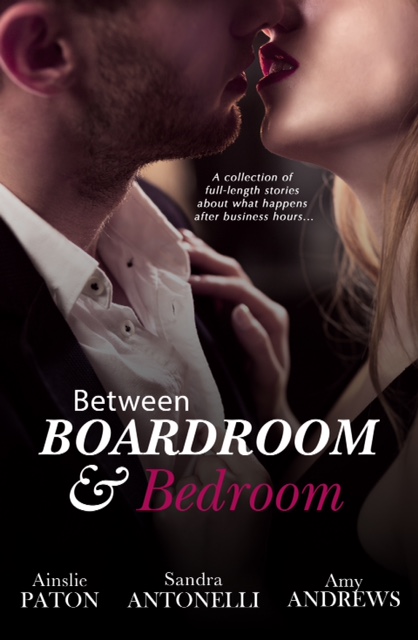
boardbedThis comes out on Saturday. I’m snuggled between two amazeballs authors.

I’m like the meat in the LOVEWICH!

Feel the love.

Taste the Love.

Have a bite of Ainslie Paton, Amy Andrews, and me!

Here’s MORE LOVE:

I’m thrilled to be in the company of such wonderful authors. Not only are these women brilliant writers they are incredibly supportive and generous to other writers. I am constantly blown away by the level of their generosity to the romance writing community, and, personally, by how they have encouraged and supported me over the years.  Truly, they shine as writers and as human beings. I am humbled by their skill with words, but more so by their skill as human beings.

So here’s where I say thank you to Ainslie Paton and Amy Andrews, and to our wise publisher, Escape Publishing, for snuggling me in the middle of you both. Thank you. Thank you. I hope you two rub off on me.

Between Boardroom & Bedroom is: A collection of full-length novels about what happens after business hours…

Insecure — Ainslie Paton

The worst thing a man can do is not be with the woman he loves.

Jacinta was the CEO in waiting. Mace was the geek from IT. She had an office suite on the top floor. He worked in cubicle hell.

She had power, influence, her life mapped out. He had big dreams, and an appetite for risk.

They had one hot night written all over them, except the city conspired to turn that night into a weekend of unexpected passion and deep connection.

Will love be enough when Jacinta’s star falls and Mace’s dream takes flight, or will ambition, expectation and insecurity pull them apart?

Driving In Neutral — Sandra Antonelli (that’s me!)

A quick-witted romance about facing your fears — like love, the greatest risk of all.

Levelheaded Olivia Regen walks away from her car-racing career and the wreckage of a bad marriage to take on new work that’s far removed from the twists of racetrack. Her new life is about control, calm, and the friends that she adores.

But her first day on the job involves getting up close and too personal with her claustrophobic boss, alone in a broken elevator. Her unconventional solution for restoring his equilibrium shocks them both– leaves Olivia shaken.

Determined to stick to her plan, Olivia drives headlong into work and planning her over-anxious best friend’s wedding, leaving no room for kissing, elevators, or workplace relationships. But Emerson is not one to be out-maneuvered. Can he convince Olivia that her fear of falling in love again is just another kind of claustrophobia — one that is destined to leave them both lonely?

Risky Business — Amy Andrews

From bestselling author Amy Andrews comes a new romance about putting pleasure before business.

Samantha Evans’ life is going to hell. Not only has she rage-quit her beloved high-powered job, but she is suddenly afflicted by hormones, free time, and an unavoidable, undeniably gorgeous irritant in the form of Nick Hawke, her neighbor, an extreme sports star who has come home to take over the reins of his grandmother’s second-hand bookshop. Sam needs something to keep her from begging for her old job back and helping Nick at his bookstore might be just the thing.

Nick has six months to get over an injury. That means no sports, no danger and, above all else, no risks. It means playing it safe. And what could be safer than hiring a cranky, unemployed accountant to help run the bookstore? Sam is efficient and methodical and messing up her neat, post-it note world could be a fun way to pass the time…

Loving the Beast: Or What I Learned From Loving the Villain

Luke Evans as Gaston. I approve.im-such-a-bad-boy

Everyone thinks the story Beauty and the Beast is about Belle and the Beast, a cursed prince, but really it’s about Gaston’s ability to expectorate, decorate with antlers, and his slide into hell.

You can keep your pure-hearted heroines and heroes. I’ve always liked fairy tale villains best. Villains give a better example of what it means to be truly human. Villains face or ignore their own shortcomings. Villains illustrate the concept of free will. Villains demonstrate human frailty, human morality. Villains illuminate how to and how not to behave if one wants to be loved, accepted, and admired. We learn more about ourselves from the villain’s actions than we do from the heroine’s or hero’s actions.

Heroines and heroes can be kind of boring, particularly if they are all goody-goody, principled types. Why I think Cinderella is boring as dry grass is that I never learned anything from her, and I never learned anything from Sleeping Beauty, from The Little Mermaid, or Snow White either—other than if you’re pretty people hate you. But I learned plenty from the evil stepmother, nasty stepsisters, and The Evil Queens: If you do something mean it will, eventually, bite you on the ass and lead to your downfall.

Best to avoid being mean.

I love a well-fleshed out villain, but what I love even more is a character who has villainous traits. For me, what makes Mr Rochester far more interesting than Mr High Morals Darcy is that Rochester has a secret, a screaming wraith of a secret that makes him deceitful. The secret is in the attic and it very nearly ruins him. What do we learn from Rochester’s villainous behavior?

Polygamy is bad and don’t keep secrets from the woman you love.

queen2Naturally, my love for a bit o’ badness points to the usual discussion about ‘niceness,’ as in how the leads, particularly the female lead in a romance novel, must be ‘nice,’ never nasty or bitchy, which points to the double standard discussion about how women ‘ought to behave,’ and how older women have been maligned for centuries, which points to a discussion on social mores blah, blah…

I want more female leads in romance fiction to be villainous, to have villainous traits the way Scarlett O’Hara and Rochester do. While Scarlett’s behavior in Gone With The Wind would never be questioned if she had been a man, she is, like Rochester, a perfect example of how good people, men and women, do bad things to protect what they love.

Yes, that is what I learned from Scarlett O’Hara and Mr Rochester.

What I learned from fairy tales wasn’t be pretty, be tidy, kiss frogs because they may be princes. My education came from the villains. I learned to never pretend to be something I wasn’t because that would get me shut up in a cask stuck with nails and dragged through the streets. I leaned to never be wicked to others because that would get me shut up in a vat with poisonous snake and then boiled in oil. I learned to be happy and grateful for what I have because, like the materialistic fisherman’s wife, I could lose it all in a flash, and its only ‘stuff.’

In Beauty and the Beast, Gaston’s utter ruin teaches us how to be human far better than the Beast does when he is transformed by love. Gaston’s transformation from man into a real hellish beast shows us that the villains are the true teachers in fairy tales and in life.

The 3 or 5 Hats of Sandra Antonelli

hatsjpgLast week was a busy one. Like Bartholomew Cubbins, I wore a lot of hats– not quite 500 hats, but  3 or 5, which is a lot of hats when you’re a little over 5 feet tall.

My first hat was a holiday hat. Dr Shrinkee and I flew to Adelaide–a city in South Australia that was NOT settled by convicts transported for stealing a loaf of bread. We rented (or hired as we say here) a Toyota Something Silver Sedan with a giant trunk (boot) far too large for the ONE piece of luggage we shared, and drove around wine country where I took lots of photos of bees doing their bee thing because bees are awesome.Bee1

The holiday hat was put away when I went to attend the Romance Writers of Australia Conference in the seaside Adelaide suburb of Glenelg. I was at the conference to do the sort of stuff writers do at writers conferences such as meet romance industry types, like agents and editors. Hat No. 2 was kind of something of a fedora that I did a nervous Jimmy Stewart-esque fumble with while I pitched At Your Service, the story of a butler, her boss, her dead husband, a missing trust fund, and a deadly toilet brush to an editor at a well-known romance publishing house.

I wasn’t half as nervous about the pitch as I was the fact I had interviewed the editor back in 2012, when I was in the middle of my doctoral research on why publishers wrinkled their noses at older romance heroines. The mind-blowing thing about the pitch was the fact the editor remembered me. The other mind-blowing thing is that she wanted to read the full manuscript about the butler, her boss, her dead husband, a missing trust fund, and a deadly toilet brush.

The third hat was one I shared with Dr Shrinkee as we presented a a workshop together at the Romance Writers of Australia Ain’t Love Grand conference.  The workshop was titled  Personality Goes a Long Way: Is Your Bad Boy a Psychopath or A Dude with ‘tude? As you can imagine, what with Dr Shrinkee being a psychologist at a WRITERS conference, the workshop was all about crafting characters with believable personalities–good guys and bad guys.

Hat No. 4 was one of those English style floppy bonnets university graduates and academic types in the UK and Australia wear because I presented an academic paper at the University of Love conference that ran concurrently with the RWAus’ Ain’t Love Grand.  You know my paper was ALL ABOUT placing women over 40 as protagonists in romance fiction– the stuff that I discovered in my doctoral research, the stuff I go on about ALL THE TIME.  The paper was titled The (Saggy) Bottom Line: Women of a Certain Age and Romance Fiction.

Aside from speakiBee2JPGng a little too fast (I was excited) and not being able to hear the awesome clip from Amy Shumer’s Last Fuckable Day (Go watch it RIGHT NOW), I did rather well. I was surprised by the number of questions I fielded. I still sometimes think that I’m shouting into the wind about ageism, stereotypes, and the need for broader representation of women of a certain in romance fiction. However, the questions I was asked provide more evidence that readers want to see themselves, or people like them, represented in romance fiction. I was very HAPPBEE to learn that.

See what I did there?

Side note: I am grateful that Kat from BookThingo kindly tweeted bits from my presentation. Thank you for that Kat. Thanks also to Kaetrin from Kaetrin’s Musings and Dear Author for giving a wonderful wrap-up of the RWAus Ain’t Love Grand and University of Love conferences, as well as mentioning our ongoing differences of opinion on whether Gone With the Wind is a romance or not–I say yes, Kaetrin says NOOOOOOooOooOo!

I never saw hat 5 coming. It was half hidden by the ENORMOUS mountain of laundry and dust bunnies that had accumulated after a week away from home. I am happy to say I washed (an ironed) everything and vanquished vicious dust bunnies like a badass in a laundry drudge’s bonnet.

Older Broads Are The New Box-Office Powerhouses. Are You Listening Romance Publishers?

Wielding my Shield of Smartass

Wielding my Shield of Smartass

As part of the ongoing expansion of The “Mature” Content Stockpile of articles regarding women and age on this website, I keep track of news and other items I can add to the stockpile. When I came across this fab piece by Mark Harris from NY Mag over at Vulture you know I fist bumped myself, and OH YEAH MAMA-ed while I jumped all my about my kitchen. I was so loud, so exuberant, the builder installing insulation in my garage called out to to make sure I hadn’t hurt myself.

The article is titled Actresses Over 60 Are the New Box-Office Powerhouses.  As I read, the line that first stood out is pretty much what I soapbox about on a regular basis. Harris mentions “society’s tendency to write off older women as dear little “characters” without passions or aspirations of their own.” Then Harris goes on to discuss a 1968 study in Hollywood that examined the age demographics of film-goers.  It’s that paragraph that truly hits home; it’s what I say about a certain overlooked demographic of romance readers with an appetite for a certain overlooked subgenre of romance fiction–the Older Romance, Mature Romance, Mid-Adult Romance, Seasoned Romance, Contemporary Adult Romance. 

The audience is real, and so is its appetite. And those who get it — who don’t simply view this particular group of movie lovers as the “about to die” demographic — may, a few years hence, look like very smart early adapters. In 1968, well before demographics were a subject of serious discussion at the studios, Variety reported the results of a study that showed 48 percent of American moviegoers were 24 or younger. For the middle-aged men who then ran Hollywood and thought they were making movies for themselves, the news was revelatory. Baby-boomers — the pig in the python — were coming of age, and over the next 15 years, the way movies were conceived, made, and marketed would undergo a revolution as a result. Now, almost 50 years later, that demographic is coming of old age, and making itself heard again. And if anyone wants it, they’ve still got money to spend. —(Harris, 1 Aug 2016)

Did you notice that first line Early adapters are smart?

Did you notice the last line? That last line means I have to rewrite a small part of an academic paper I am presenting at the upcoming University of Love conference in Adelaide, Australia. My paper is titled The (Saggy) Bottom Line: Women of a Certain Age and Romance Fiction. I have to include what Harris says alongside what a few other studies and authors note. That last line is a big fat flag I wave when I’m on my soapbox, a big fat signpost that is being overlooked by the publishers of romance fiction.

In case you missed it, because romance publishers miss it, so it must be easy to miss, that big fat signpost is MONEY.

I’ve said it before, I say it in my paper presentation, and I’ll say it here again, There is a demographic of romance fiction readers  who MATCH this demographic of film-goers, and this demographic wants romance fiction that reflects the reality of their lives, not some hackneyed stereotyped bullshit about how a woman over 40 is dead below the waist, or, as Harris mentions, are people who buy “adult diapers and medic-alert systems and sit in their adjustable beds leaning forward with ear horns to make sure they hear the list of dangerous side effects in the commercials.”

This demographic wants romance fiction with heroes and HEROINES who are whole, intelligent, vibrant, active, sexual human beings, not diaper-wearing crazy, cat-loving, dried-up-old grannies with walkers. This demographic of romance reader wants a romance heroine who is like any romance heroine, only she just happens to be older. This demographic of romance reader is trying to make itself heard, and they have money to spend.

This Demographic HAS MONEY TO SPEND! What are you romance publishers waiting for? Early adapters WIN! Romance has been the Early Adapter of so many social changes regarding women– until now, and the industry is missing this goldmine right in front of them.

Thanks to Mark Harris for making me have to rewrite a small section my paper. I have to include this article because he’s given me more evidence that the romance publishing industry is overlooking a goldmine.

The Ick Factor and You: The Origin of the Notion Older People Having Sex Is Gross

Sometimes it doesn’t take much for me to jump on my soapbox. Last week, after I read Ann Brenoff‘s column Dear Hollywood, I May Be Invisible To You, But I’m Very Real on the Huffington Post I got in quite a lather (see what I did there, soapbox, lather?) with another reminder of the ‘culture of invisibility’ in Hollywood. You know the thing, that misguided idea that deems any woman over 40 as unviable, unwanted, unfuckable, unbankable onscreen. All lathered up, I pondered, again, the source of the idiotic invisibility. Since I have a PhD and wrote a dissertation that examined the culture of invisibility in romance fiction, I’m going to share my theory with you.

wtfRemember when you were 5 years-old, and your mother explained the penis and peegina* sex thing that time you were precocious and asked at the dinner table one night? Remember when, a short while after learning the revolting details of where babies came from, you realized that all the kissing you saw on TV, and in movies, was another incomprehensibly revolting thing that grown-ups like your parents did, and you thought every time your parents kissed they were trying to make a baby and you couldn’t fathom WHY your mother would let your father put his penis in her peegina?

Do you also remember how incredibly disgusted you were, but how your confused little kid mind tried to make sense of how you didn’t get pregnant when Raymond Michaud kissed you that time you played in the treehouse the big kids built in the woods near your house?

Remember when the whole notion of sex was absolutely repugnant and then one day it wasn’t? It didn’t seem that far-fetched or icky. But then, when you were about 11, your older brother told you about anal sex and you were all sex was never going to be something you did.

Ever.

Remember when you were 17 or 19, or 22 and kissing and sex was like perpetual springtime and a raging thunderstorm of emotion and passion and excitement? Remember when you joined the club you never thought you’d join? You wondered how you ever thought sex wasn’t something you would want to DO and be DONE TO, and you finally, FINALLY got why everyone on TV, in books and movies wanted to do it. Everyone had sex, all the time—except your parents.

Or grandparents.

Or your unmarried, forty-something aunt.

You thought this because never saw parents or grandparents or spinster aunts on TV, in books or movies doing it or even interested in doing it. They were too mature, tool old, too busy with work and retirembunsent, and went to bed early after their 4:30 dinnertime. And movies, books, and TV didn’t lie. The message was subtle, but you noticed, unconsciously, that people only ever had sex when they were young. You never saw people over 40, like your grandparents, kissing or groping, grinding, or dry humping on TV, in books or movies, and because you never saw it the idea of people over 40 kissing—or humping—was as incomprehensibly revolting as your mother letting your father put his penis in her peegina. The only reason your parents and grandparents still kissed was because they were Italian, Italians are affectionate, and that sort display of affection was allowed on TV, in movies and books. Your parents and grandparents weren’t really passionate because passion was for the young. The perpetual springtime raging thunderstorm of emotion and passion and excitement was for the young you saw on TV, in movies, in books, in romance fiction.

The images of youth are everywhere in the media, on TV, in books, movies, advertising, and this is the insidious way the Ick Factor is enacted. You are indoctrinated without knowing. You are misled to believe sex and passion is only for the young since that is all you see. This perpetual lack of truth is the way stereotypes of age and sex are maintained. The erasure of a huge portion of the population from view has led to the notion that sex is something only human beings under 40 want and enjoy. But it’s worse. If you’re a woman, you notice there’s a double standard when it comes men and women and sex. As you get a little older, maybe when you hit 30, you realize there’s an additional aspect to the Ick Factor you didn’t notice before, when you were younger. Men over 40 continue to get it on in books, movies and on TV.

Women grando not.

Even more sinister is way the Ick Factor works, the continual lack of truth is the way stereotypes of woman and age are maintained, the way women over 40 are cast in stereotyped roles (Hey, grandma!) or dismissed, excluded from appearing on TV, in movies and books. This is truly incomprehensibly revolting, and this is how we are conditioned to think. We erase women over 40 from being when we know this is NOT how women over 40 are.

In a world of reality television, isn’t it time to change the Ick Factor to a Truth Factor? Isn’t it time we show life as it really is, show people of all ages as whole, passionate, sexual human beings in love? Isn’t it time we grow up from being grossed out little five year olds who can’t comprehend how mommy would let daddy put his penis into her peegina?

I battle the Ick Factor. I write books that challenge the ‘younger’ norm of romance fiction. My lead characters are all over 40; the romance heroines are older than the standard twenty-something romance heroine.  The women I write are whole, intelligent, vibrant, sexual humAntonellicoverssmallan beings, not stereotypes of age. I write outside the norm because I believe it is beyond time to change. Discussing the Ick Factor and the ‘culture of invisibility’ is excellent, important, but what good is all the talk about age discrimination and sexism if no one challenges the ‘usual?” For decades, Romance fiction has been at the forefront of adapting to social and cultural change for women. What better place to shift the attitudes about women age, sexuality, make women of a certain age visible, and kill the Ick Factor?

Trust me on this. I’m a doctor who writes romance fiction.

*Becasue Pee comes out of a boy’s penis and pee comes out of a girl’s peegina

Next to You and An Introvert on Book Release Day

NextToYou_V1_FINAL Round3-Harlequin1920_1920x3022It’s BOOK RELEASE DAY for Next to You

This is the point where there are a choice of ways for me to react. Let’s examine them and break them down.

I could have a Book Launch Brunch, except… As much as I LOVE the breakfast-lunch amalgam that allows others to imbibe and relax with alcohol whilst I get hyped-up on caffeine, I’m an introvert who hates parties where there are more than six people, and no one, except me, would get up and boogie to the Partridge Family’s I Woke Up In Love This Morning from William Murphy’s Bubblegum pop classics playlist if there’s hollandaise, coffee, and booze.

I could be obsessive and check my sales rank on Amazon, today and tomorrow because it’s July 25th here in Australia, but not yet in the UK or North America. However, Amazon boggles my mind and means nothing much at all to me, except for the fact that I’ll eventually get a royalty statement showing that I made enough money from selling a few copies of Next to You to allow me to buy three to ten cups of coffee.Antonellicoffe

Those three-to ten cups of coffee—OH WHAT JOY!!

It’s a proud moment and I’d like to burst into my favourite local café and shout COFFEE FOR EVERYONE, which, for me is the equivalent of popping a cork on something, tossing confetti and SQUEEEING and stuff…except that introvert, more-than-six people thing again, and I SQUEE better on paper. So I’m gonna go to my favourite local café and continue writing my new book at my favourite table in the corner, and have 2 cups of coffee that, thanks to my readers, my royalties have allowed me to buy. And coffee OH WHAT JOY!

I’m really, really incredibly happy to have William Murphy and Caroline finally meet and have you meet them. Thank you for sharing this moment with me and, well, if you happen to stop by and see me at my favourite café, know that I am truly enjoying the coffee you bought me when you bought my book.